How to Teach History Through Immersive Stories That Stick

Last Updated: November 18, 2026
Quick Summary
Teach history through immersive stories by anchoring each narrative in one historical question, building the setting and characters from primary-source evidence, then pausing at turning points so students predict, debate, and reflect. This three-step framework turns history from information into experience students remember.
- Keep story segments to 5-7 minutes for grades 2-3 and 10-12 minutes for grades 6-8.
- Score a four-row rubric on evidence, cause and effect, perspective, and larger-story connections, 0-2 per row.
- Run a two-week retention check asking students for three remembered details and one remaining question.
- Reveal primary sources after the story as clues, then ask whether they match what students heard.
- Grade the reasoning students give when explaining a choice, never the role-play performance itself.
Table of Contents
- Why Immersive Stories Make History Stick
- A Repeatable Framework for Story-Based Learning Lesson Plans
- Historical Storytelling Activities for Students in Grades 2 Through 8
- Historical Empathy Lesson Ideas That Go Beyond Feeling Sorry
- Using Primary Sources in History Lessons Without Breaking the Spell
- Keeping Stories Accurate, Inclusive, and Age-Appropriate
- How to Assess What Students Learned From the Story
- Pick a Story-Driven Lesson to Try This Week
- Frequently Asked Questions
Why Immersive Stories Make History Stick
History taught as a list of dates and names slides off students fast. Immersive stories work differently: they drop learners into a moment, give them a person to follow, and let the facts attach to a feeling. That is how you teach history through immersive stories, and it is why the approach holds up in classrooms and at kitchen tables alike.
Capite Universe builds story-driven lessons for kids ages 6 to 14, so this topic comes up constantly. A 2026 study led by B. Kindenberg examined oral storytelling in history classrooms and found that stories can engage students both emotionally and analytically, the two gears that drive real historical understanding (study on storytelling and historical empathy).
The key idea: immersive stories turn history from information into experience.
A Repeatable Framework for Story-Based Learning Lesson Plans
Story-based learning lesson plans fail when they are just "read a story and talk about it." A repeatable framework keeps the magic while giving you structure. Here is the three-step process we recommend.
Step 1: Anchor the Story in One Historical Question
Pick a single question the story will answer, such as "Why did people leave everything behind to start over?" One question gives the narrative a spine. Write it on the board before you begin. Students then read and listen with a purpose.
Step 2: Build the Setting and Characters From Evidence
Choose a real person or a realistic composite, then describe the setting with vivid detail: the smells, sounds, and textures of the period. Base those details on primary sources and artifact evidence, not imagination alone. A 2024 paper by R. Brunetti describes immersive education as an educational methodology built on interactive narratives (paper on Immersive Education). That is the principle at work: the narrative carries the learning.
Step 3: Pause for Prediction, Discussion, and Reflection
Stop the story at a turning point and ask: "What would you do next?" Let students predict, debate, and then hear what actually happened. This pause is where historical thinking grows, because students compare their reasoning to the evidence.
If you teach several grades at once, our guide on how to teach history to multiple grade levels at once shows how to run one story across different levels.
Historical Storytelling Activities for Students in Grades 2 Through 8
Match the activity to the age, not just the topic. Younger kids need movement, props, and short segments; older kids need debate, evidence, and room to disagree. The table below gives you one concrete activity per grade band, the materials it needs, and how long it runs. Most options need only paper, index cards, and your voice, so you can run one tomorrow.
| Grade band | Activity | Materials | Time | What it builds |
|---|---|---|---|---|
| Grades 2-3 | Soundscape read-aloud: you read a short story segment while students make the sounds of the setting (market noise, wind, cart wheels) with voices and hands | Story text, one hand-drawn map | 15-20 min | Sensory setting, attention |
| Grades 2-3 | Draw-one-scene: after the read-aloud, each student draws the moment they remember most and labels one detail from the story | Paper, crayons | 15 min | Retention, detail recall |
| Grades 4-5 | Role cards: pairs get a card with a historical person, a goal, and two facts, then hold a two-minute conversation in character | Printed role cards | 20-25 min | Perspective-taking, evidence use |
| Grades 4-5 | Object analysis: pass around a photo or replica object from the period and ask what it tells us about daily life | One image or object per group | 15 min | Primary-source reasoning |
| Grades 6-8 | Structured debate: assign perspectives from the story, give each side two sources, and debate the anchor question | Source packets, timer | 30-40 min | Argument from evidence |
| Grades 6-8 | Living timeline: students physically order event cards from the story, then defend one placement | Event cards | 20 min | Chronology, cause and effect |
| All ages | Freeze-frame: groups pose as a moment from the story and the class asks them questions in character | None | 10-15 min | Embodied understanding |
A few practical notes. Keep story segments to 5-7 minutes for grades 2-3 and 10-12 minutes for grades 6-8; attention drops sharply past those windows.
Watch out: role-play and freeze-frame can drift into performance for its own sake. Before you start, tell students the goal is to explain a choice, not to act well, and stop any scene that turns a historical person into a caricature.
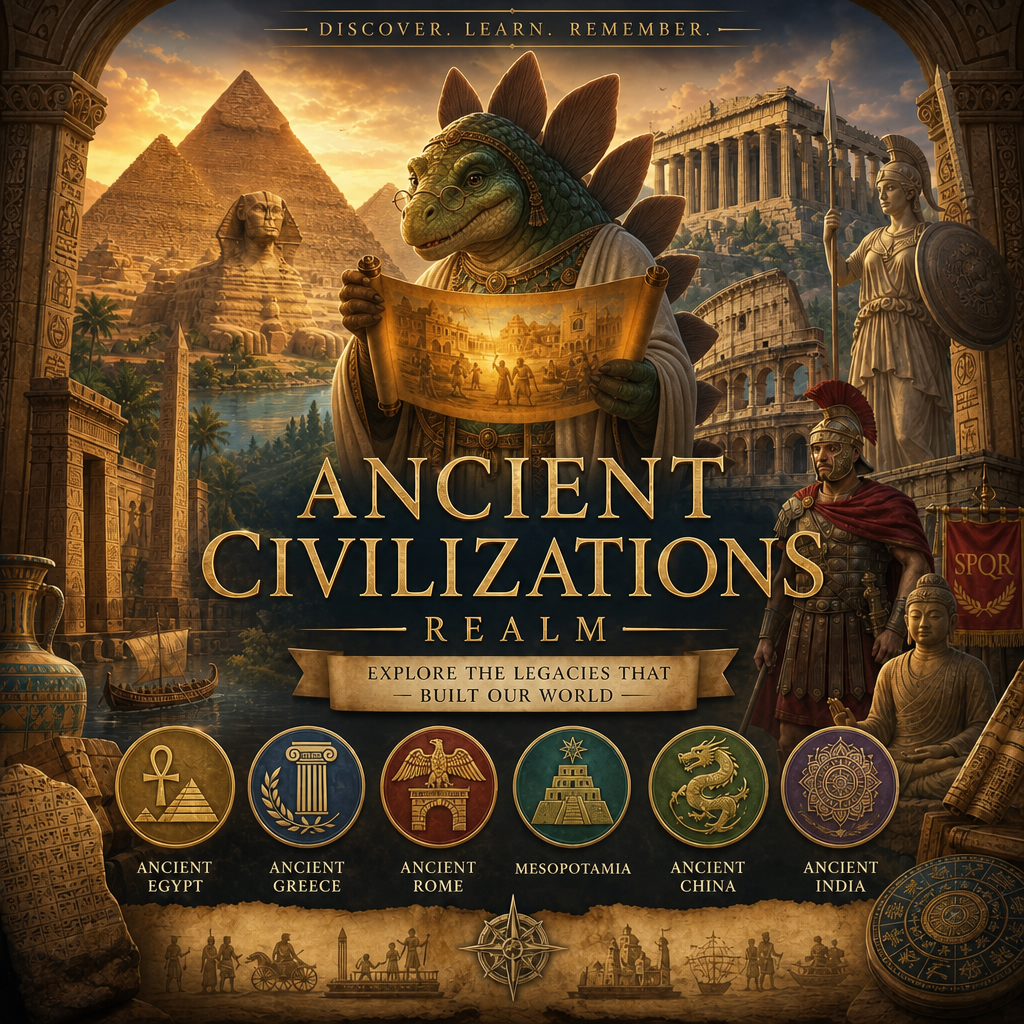
If you teach several grades at once, our guide on how to teach history to multiple grade levels at once shows how to run one story across different levels. For a ready-made option, the Ancient Civilizations Realm supplies story-based activities for elementary and middle grades in one themed package.
Time needed for historical storytelling activities by grade band
Historical Empathy Lesson Ideas That Go Beyond Feeling Sorry
Historical empathy is not pity. It is the skill of understanding why people in the past made the choices they did, given what they knew. A common mistake is letting sympathy replace analysis. Push students to ask: "What did this person actually believe, and what evidence shows it?"
Try these historical empathy lesson ideas:
- Write a diary entry from a person in the story, using three facts from the source.
- Hold a "perspective circle" where each student argues from a different point of view.
- Ask students to name one thing the historical figure got right and one thing they got wrong.
Our article on the benefits of immersive learning for kids explains how this builds empathy over time.
Using Primary Sources in History Lessons Without Breaking the Spell
Primary sources in history lessons can feel like homework dropped into a good story. The fix is timing. Read the story first, build the emotional connection, then reveal the source as a clue the students get to examine.
Try this sequence:
- Tell the story segment.
- Show one letter, photo, or object from the period.
- Ask: "Does this match what we heard? What does it add?"
- Let students revise their understanding.
The takeaway for you: evidence and story belong together, not in separate boxes.
Keeping Stories Accurate, Inclusive, and Age-Appropriate
Accuracy is non-negotiable. The Fordham Institute argues for a content-rich curriculum that separates truth from myth and leans on primary sources, noting that coherent stories help students build understanding but do not replace real content (Fordham Institute on storytelling in the curriculum). So fact-check every detail you invent.
For inclusion, tell stories from multiple perspectives and include voices often left out. For younger students, soften violence and trauma without erasing them. For older students, name the hard parts honestly.
Watch out: reenactment can cross a line into spectacle. Set clear boundaries before any role-play that touches on suffering.
How to Assess What Students Learned From the Story
Skip the multiple-choice quiz. Assess historical thinking instead, and do it with tools you can score in five minutes.
1. A four-row rubric for the anchor question. Have students write two paragraphs answering the anchor question from Step 1 and citing at least one source. Score each row 0-2, for a total of 8:
- Uses evidence: names a specific source detail and connects it to a claim.
- Explains cause and effect: states why something happened, not just what happened.
- Considers perspective: describes what a historical person believed and why.
- Connects to the larger story: places the event in a sequence or a bigger pattern.
A score of 6-8 means the story built understanding. A score of 0-2 usually means the student enjoyed the narrative but did not convert it into historical thinking, which tells you to add a source-analysis pause next time.
2. A two-week retention check. Two weeks after the lesson, ask students to write down three things they remember and one question they still have. Compare the details they recall against the story's key facts.
3. A perspective-taking exit ticket. Give one sentence: "This person chose ___ because ___." Score it on whether the because clause cites something the person actually knew or believed, not what the student would have done. This is the fastest way to catch sympathy replacing analysis.
For younger students in grades 2-3, replace the written response with an oral retell: ask them to tell the story back to you and name one thing the main person wanted.
Watch out: do not grade the role-play performance itself. Grade the reasoning students give when you ask them to explain a choice, or you will reward acting over evidence.
Our article on the benefits of immersive learning for kids explains how this builds empathy over time.
Pick a Story-Driven Lesson to Try This Week
You do not need a full unit to start. Pick one story, one question, and one pause for discussion this week. The Pirates in Time full lesson gives you a complete, ready-to-run adventure with story segments, knowledge boxes, discussion questions, and printable worksheets for ages 6 to 12. It is a low-risk way to test the framework before you build your own.
Teaching history through immersive stories asks more of you than handing out a worksheet, and that is exactly why it works. Students remember what they felt, debated, and figured out. Capite Universe builds story-driven lessons with interactive narratives, printable activities, and teacher-approved materials that make this approach easy to run at home or in class. Get started with Capite Universe and turn your next history lesson into an adventure students actually remember.
Frequently Asked Questions
How do immersive stories help students understand history better than a textbook?
A textbook gives facts in order; a story gives them a reason to care. When students follow a character through a historical event, they meet cause and effect, chronology, and point of view as lived experience rather than labels. Storytelling in history lessons can engage students both emotionally and analytically. The practical result is that students ask better questions, remember more detail, and can explain why events unfolded the way they did.
What are simple historical storytelling activities for students in elementary and middle school?
Try three low-prep options. First, a witness interview: you play a person from the period and students ask questions. Second, a freeze-frame: small groups pose as a moment in the story and classmates guess what is happening and why. Third, a two-voice journal: students write one entry as a historical figure and one as an ordinary person nearby. Each activity keeps the narrative central while pushing students to use historical evidence and compare perspectives.
How do I teach historical empathy without turning the lesson into a feelings exercise?
Historical empathy means reconstructing how a person understood their world, not approving of their choices. Give students context first: what did this person know, what were their options, and what did their society expect? Then ask them to explain a decision in that person's terms before they judge it. The same principle applies in class: immersion plus evidence, then interpretation.
How can students tell the difference between historical fact and fiction in a story?
Make the difference visible. After reading, hand out three or four primary sources and ask students to mark which parts of the story the evidence supports, which parts are plausible but unproven, and which parts the author invented. A content-rich approach separates truth from myth and uses primary sources, and this sorting task does exactly that. Students leave knowing that a good historical story is built on evidence, and that spotting the seams is part of the skill.


