How to Keep Children Engaged Learning: 7 Proven Strategies

Table of Contents
- Why Children Lose Focus During Learning
- Build a Structured Educational Routine That Sticks
- Create a Distraction-Free Learning Environment
- Interactive Learning Tools for Kids That Drive Engagement
- Strategies to Increase Student Engagement Through Movement and Breaks
- Fun Educational Activities for Kids That Build Real Skills
- Provide Immediate Feedback and Celebrate Progress
- Common Mistakes That Kill Student Participation
- Frequently Asked Questions
Last Updated: September 28, 2026
Why Children Lose Focus During Learning
Children lose focus for predictable reasons, but most parents address only the surface symptoms instead of learning how to keep children engaged learning. Boredom, frustration, and distraction are the visible culprits. What lies beneath them, emotional dysregulation, learned helplessness, and shame, are the real engagement killers.
The brain needs novelty and challenge to stay engaged. Too easy feels pointless. Too hard feels impossible. But there's a psychological layer most guidance skips: when a child fails at a task that feels too hard, they don't just lose focus, they develop avoidance. They learn that disengagement protects them from the feeling of failure. Over time, this becomes a habit. The child doesn't just lose focus; they actively resist re-engagement because the emotional risk feels too high.
Frustration tolerance is a learnable skill, not an innate trait. Children with low frustration tolerance (common in kids with ADHD, anxiety, or perfectionist tendencies) shut down faster when they encounter difficulty. They interpret struggle as evidence they "can't do it," rather than as a normal part of learning. Without explicit coaching on how to sit with discomfort, they'll choose avoidance every time.
Distractions also kill focus, but they're often a symptom, not the root cause. A child who's anxious about the task will seek distractions. A child who's bored will create them. A child who's dysregulated will be hypersensitive to every sound and movement in the room. Removing distractions helps, but it doesn't address why the child is vulnerable to them in the first place.
Understanding the emotional architecture of disengagement, not just the surface triggers, is the first step to fixing it. Once you know whether a child is avoiding due to shame, seeking stimulation due to understimulation, or dysregulated due to anxiety, the intervention becomes precise instead of generic.
Build a Structured Educational Routine That Sticks
A structured routine removes the friction that kills engagement. When kids know exactly when learning happens, where it happens, and what comes next, they settle in faster.
The routine doesn't have to be rigid. It just has to be consistent. Same time, same place, same sequence of activities. This predictability calms the nervous system and primes the brain for learning.
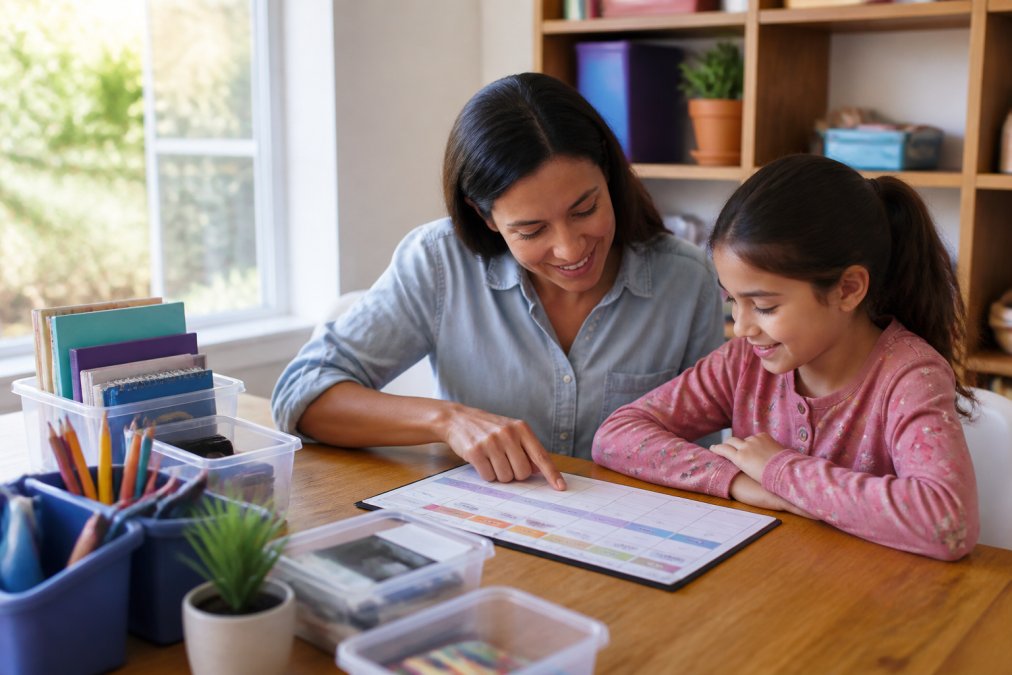
Start small. Pick one time of day and one location. Morning works well for many families because energy is highest. Afternoon works if mornings are chaotic. The timing matters less than consistency.
Build the routine in layers:
- First 5 minutes: transition (put away distractions, settle into the space)
- Next 20-30 minutes: focused learning activity
- Last 5 minutes: review and celebrate what was learned
This structure works because it sets expectations. Kids know what's coming. They know when it ends. They know effort will be recognized.
Families often succeed when they anchor learning to an existing routine. Right after breakfast. Right before dinner. Right after sports practice. The anchor matters more than the clock time.
Create a Distraction-Free Learning Environment
A distraction-free space is non-negotiable. Phones, tablets, background noise, and clutter all pull attention away from learning.
The space doesn't need to be fancy. A corner of the kitchen works. A bedroom desk works. What matters is that it's quiet and clear of competing stimuli.
Create a checklist for setup:
- Phone on silent, in another room
- Tablet or computer off unless needed for the lesson
- Notebooks, pencils, and materials within reach
- No TV, music, or background noise
- Siblings or pets removed if possible
This sounds strict, but it works. When the brain has fewer options, it focuses on the one thing in front of it.
Lighting also matters. Natural light is best. If that's not possible, a bright desk lamp reduces eye strain and keeps energy up. Dim lighting signals rest time, not focus time.
Temperature and comfort count too. A room that's too hot or too cold breaks concentration. A chair that's uncomfortable makes kids fidget. These small details compound.
Interactive Learning Tools for Kids That Drive Engagement
Interactive tools transform passive listening into active participation. Kids learn better when they're doing something, not just watching.
The best interactive learning tools for kids combine story, challenge, and immediate feedback. They make the learner feel like a participant, not an audience member.
Good tools share these traits:
- Clear feedback (the kid knows right away if they're right)
- Progress that's visible (points, levels, or unlocked content)
- A story or narrative that gives context to the learning
- Difficulty that adjusts to the kid's level
- No ads or distracting notifications
Capite Universe's story-driven approach helps keep children engaged learning by embedding skills practice inside compelling narratives. Kids solve problems to advance the story. They practice reading to unlock new chapters. The learning happens inside the adventure, not separate from it.
The Capite Universe Membership gives access to all realms and exclusive bonuses each month. For families juggling multiple kids across different ages, it can be a flexible option.

Free tools have a place too. But they often lack the narrative structure that holds attention. Kids complete one activity and lose motivation for the next.
Strategies to Increase Student Engagement Through Movement and Breaks
Sitting still for 30 minutes is torture for most kids, but it's especially true for children with ADHD, sensory processing differences, or autism. Movement isn't a distraction from learning for these children, it's a prerequisite for it.
Physical activity breaks improve focus and retention for all learners, but the type of movement matters for neurodivergent children. A 5-minute movement break every 20 minutes resets the brain and burns off restless energy, but the break should match the child's sensory and motor needs, not just be generic activity.
For children with ADHD: Movement that provides proprioceptive input (heavy pressure through joints and muscles) works best. This includes:
- Wall push-ups or isometric holds (pushing against a wall for 10 seconds)
- Carrying heavy objects (a stack of books, a weighted backpack)
- Jumping jacks, jump rope, or bouncing on a trampoline
- Pushing or pulling resistance exercises
These activities activate the vestibular and proprioceptive systems, which help regulate attention and reduce hyperactivity. A child with ADHD who bounces while reading or solves math problems while doing wall sits isn't fidgeting, they're self-regulating their nervous system so their brain can focus.
For children with sensory processing differences: Movement should either provide calming input or controlled stimulation, depending on whether the child is over- or under-responsive:
- Calming: slow, rhythmic movement like walking, swaying, or gentle stretching
- Stimulating: fast, dynamic movement like dancing, spinning, or climbing
Offer choices. Let the child pick what their body needs in that moment.
For all children: Incorporate movement into the lesson itself, not just as a break from it. This is more efficient and keeps engagement higher:
- Act out a historical event or story scene
- Use hand motions or full-body movements to remember vocabulary (sign language, dance moves for spelling words)
- Build something with blocks or manipulatives while learning about architecture, geometry, or engineering
- Walk while reciting facts or reading aloud
- Use a standing desk or stability ball instead of a chair
These strategies work because they match how some children's brains actually process information.
Fun Educational Activities for Kids That Build Real Skills
Fun activities don't mean wasted time. The best fun educational activities for kids teach real skills while feeling like play.
Project-based learning works well:
- Create a comic book that tells a historical story
- Build a model and explain how it works
- Write a how-to guide for something they know how to do
- Design a game and teach someone else to play it
- Start a blog or newsletter about a topic they care about
Provide Immediate Feedback and Celebrate Progress
Feedback shapes behavior. Kids repeat what gets acknowledged. They abandon what gets ignored.
Specific feedback beats generic praise:
- GOOD: "You found all three examples of simile in that paragraph. That shows you understand how the author creates imagery."
- WEAK: "Good job."
Common Mistakes That Kill Student Participation
Most engagement problems come from preventable mistakes. Knowing what to avoid saves time and frustration.
Frequently Asked Questions
How can I keep children engaged learning when they resist schoolwork?
Resistance often stems from boredom or feeling disconnected from the material. Start by connecting lessons to your child's interests, if they love dinosaurs, frame math problems around paleontology. Use story-driven learning platforms like Capite Universe that transform lessons into adventures rather than tasks. Build in movement breaks every 20-30 minutes, and let your child have some choice in what they learn. Immediate positive feedback also matters: praise effort, not just correct answers.
What are the best interactive learning tools for kids to maintain focus?
Interactive learning tools work best when they combine engagement with skill-building. Story-driven platforms keep children motivated through narrative, while apps like the Every Day Study Helper App ($8.99) organize learning without distractions. Personalized story apps let children see themselves as characters in their own educational adventures. The key is choosing tools that require active participation, not passive watching, and that align with your child's learning style and interests.
How long should children spend on learning activities before taking a break?
Most children aged 6-10 focus best in 20-30 minute blocks before needing a movement break. Children aged 11-14 can typically sustain focus for 30-45 minutes. After each block, encourage 5-10 minutes of physical activity, jumping, stretching, or a quick walk. This isn't wasted time; movement actually resets attention and improves retention. The rhythm of focused work plus active breaks keeps engagement high and prevents the fatigue that leads to resistance.
Can story-based learning really teach academic skills, or is it just entertainment?
Story-based learning builds academic skills when the narrative is intentionally designed around learning outcomes. Capite Universe combines immersive storytelling with structured lessons in reading, critical thinking, and creativity. The narrative context helps children remember information longer because stories activate more brain regions than isolated facts. Teacher-approved platforms ensure the entertainment serves the education, not the other way around. Look for platforms that clearly connect story elements to specific skills your child needs to develop.
Keeping children engaged learning isn't about finding the perfect tool or the trendiest method. It's about building routines, removing distractions, matching activities to interests, and celebrating effort. Capite Universe makes this easier with story-driven content that holds attention and teacher-approved activities that build real skills. Start with one routine, one quiet space, and one activity that matches what your child actually cares about. The rest follows.


