How to Create a Daily Reading Habit for 10-Year-Olds

Table of Contents
- Why Daily Reading Matters for 10-Year-Olds
- Step 1: Set a Consistent Reading Schedule
- How Long Should a 10-Year-Old Read Per Day
- Step 2: Create a Dedicated Reading Space
- Step 3: Choose Books That Match Their Interests
- How to Encourage a 10-Year-Old to Read More
- Reading Comprehension Strategies for 10-Year-Olds
- Common Mistakes to Avoid When Building Reading Habits
- Frequently Asked Questions
Last Updated: September 30, 2026
Why Daily Reading Matters for 10-Year-Olds
Learning how to create a daily reading habit for 10 year olds is one of the most powerful investments you can make in their future. At this age, children are developing the cognitive skills that will shape their academic performance, vocabulary, and critical thinking abilities for years to come. Reading isn't just about decoding words, it's about building confidence, expanding imagination, and creating a foundation for lifelong learning.

The reality is simple: kids who read consistently perform better academically across all subjects. But here's what most parents miss: the habit itself matters more than the amount. A child who reads 15 minutes every single day will develop stronger literacy skills than one who reads sporadically, even if the sporadic reader tackles longer sessions.
This guide from Capite Universe breaks down exactly how to create a daily reading habit for 10 year olds that actually sticks. We'll walk you through the specific steps, common pitfalls to avoid, and strategies that work for reluctant readers too.
Step 1: Set a Consistent Reading Schedule
The foundation of any habit is consistency. Your brain, and your child's brain, craves predictability. When reading happens at the same time every day, it becomes automatic. No negotiation. No resistance.
Finding the Right Time of Day
The best time is the time your child will actually read. This sounds obvious, but most parents pick the "best" time instead of the right time.
Consider these options:
- Right after school: Kids are home, the routine is fresh, and you can supervise. The downside? They may be tired or overstimulated.
- Before bed: This works beautifully for many families. Reading calms the nervous system and signals that sleep is coming. The challenge is keeping it short enough that they actually fall asleep.
- Weekend mornings: If weekdays are chaotic, weekend reading can be your anchor. Pick the same time both Saturday and Sunday.
- During lunch or snack time: Pair reading with a snack. The positive association builds naturally.
The key is picking one time and protecting it. Not "sometime in the evening." Not "whenever we have time." A specific time. 4 PM. 7 PM. 8 AM. Whatever works for your schedule.
Starting Small and Building Up
Most parents make this mistake: they set an ambitious goal and crash hard when reality hits.
Start with 10 minutes. Not 30. Not 20. Ten minutes of consistent daily reading builds the habit faster than 30 minutes twice a week. Your goal is to make reading so routine that skipping it feels weird, not like a victory.
After two weeks of consistent 10-minute sessions, bump it to 15 minutes. After another two weeks, 20 minutes if your child is enjoying it. The progression matters less than the consistency.
How Long Should a 10-Year-Old Read Per Day
A 10-year-old should read for 20 to 30 minutes daily. This timeframe is long enough to build reading stamina and get absorbed in a story, but short enough that it doesn't feel like a chore.
This recommendation aligns with how children develop reading comprehension and fluency. Fifteen minutes is the absolute minimum to see progress. Thirty minutes is ideal but not required. More than 45 minutes becomes counterproductive, at that point, fatigue sets in and the reading becomes mechanical rather than engaging.
The goal isn't hitting a number. It's building the habit. A child who reads 15 minutes consistently will develop stronger literacy skills than one who reads 45 minutes sporadically.
Step 2: Create a Dedicated Reading Space
Environment matters. A lot.
When your child reads in the same spot every day, that space becomes associated with focus and calm. Their brain recognizes the environment and settles into reading mode faster. This is especially important for kids who struggle with attention or have neurodivergent-friendly reading needs.
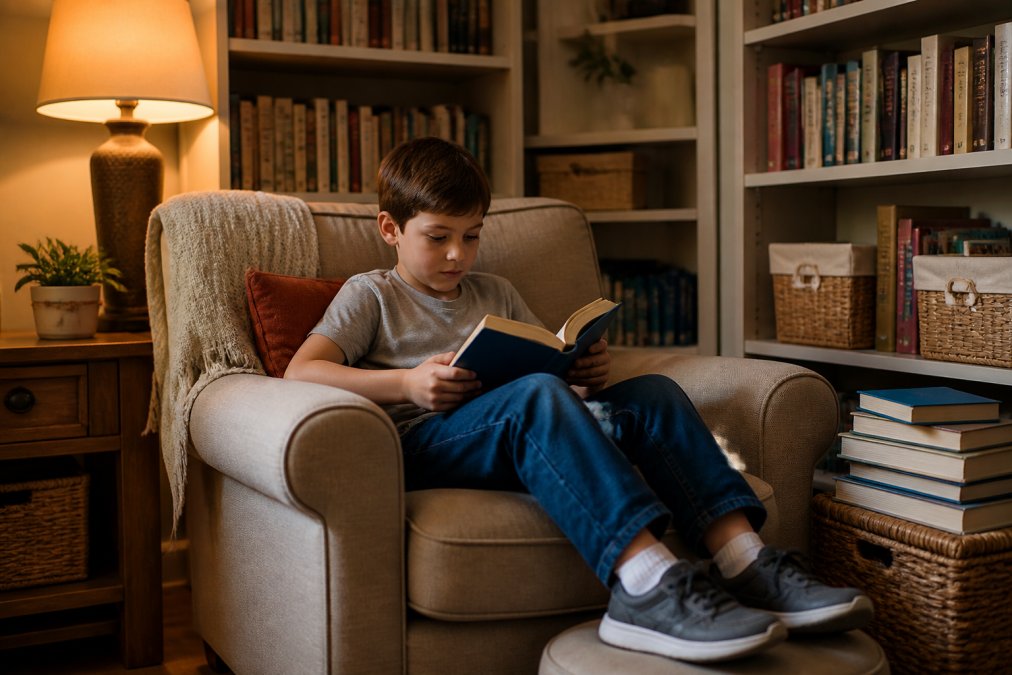
What Makes a Good Reading Nook
A good reading space has four elements: comfort, light, minimal distractions, and easy book access.
Comfort: A chair that supports their back. A cushion. A blanket. The space should feel like a retreat, not a classroom desk. Kids who are physically comfortable read longer without complaining.
Light: Natural light is ideal, but a warm lamp works fine. Avoid harsh overhead lighting, it strains eyes and creates an institutional feel. Soft, warm lighting signals relaxation.
Minimal distractions: This means no screens visible. No siblings running past. No TV in the background. The space should feel separate from the chaos of the house. Even a corner with a folding screen creates psychological separation.
Easy access to books: If your child has to hunt for books, friction builds. Keep a small shelf or basket next to the reading spot with 5-10 current favorites plus 2-3 new options. Rotate books weekly to maintain novelty.
The space doesn't need to be fancy. A corner of the bedroom with a cushion and a small shelf works perfectly. What matters is consistency, same spot, same time, every day.
Step 3: Choose Books That Match Their Interests
This is where most reading habits die.
Parents pick books they think their child "should" read. Classics. Award winners. Books that are "good for them." Meanwhile, the child sits staring at a book about a topic they don't care about, and reading feels like punishment.
Your job isn't to cultivate sophisticated taste. Your job is to build the habit. Once the habit exists, taste develops naturally.
Ask your child: What do they actually care about? Dinosaurs? Soccer? Fantasy worlds? Graphic novels? Mystery? Video game strategy? Whatever it is, find books in that category.
Some examples:
- Graphic novels and comics: These build reading skills while feeling less intimidating. Manga, DC, Marvel, indie comics, all count.
- Series: Kids who love a character or world will keep reading. Percy Jackson. Wings of Fire. The Baby-Sitters Club graphic novels. Series create momentum.
- High-interest non-fiction: Books about their hobbies, passions, or curiosities. If they love soccer, find soccer books.
- Audiobooks: Yes, these count. Listening builds comprehension and keeps reluctant readers engaged.
Print vs. Digital Reading for This Age
Both work. The research is clear: comprehension doesn't differ significantly between print and digital for this age group (pubmed.ncbi.nlm.nih.gov). What matters is engagement.
Print books offer tangible progress (they can see the pages they've read), fewer distractions (no notifications), and a different sensory experience.
How to Encourage a 10-Year-Old to Read More
Encouragement without pressure is the balance. Push too hard and reading becomes a chore. Don't encourage at all and the habit never forms.
Using Positive Reinforcement Without Pressure
Positive reinforcement works when it's specific and immediate.
"You read for 20 minutes today, that's awesome" is better than "Good job reading." The specificity shows you noticed and paid attention.
Instead, celebrate the wins:
- "I noticed you picked up that book without me asking"
- "You finished that series, which one should we get next?"
- "Your reading time is my favorite part of the day too"
Making Library Visits Part of the Routine
A weekly library visit transforms reading from a home activity into an adventure.
Reading Comprehension Strategies for 10-Year-Olds
Reading is only valuable if your child understands what they're reading. Comprehension is the real skill.
Transitioning from Read-Aloud to Independent Reading
Some 10-year-olds still need read-alouds. Others have moved entirely to independent reading. Most are somewhere in between.
Tracking Progress Without Creating Stress
Reading logs can help or hurt. Done wrong, they become another chore. Done right, they show progress and celebrate wins.
A simple tracking method:
- Title of book
- Number of pages read
- Date started and finished
- One sentence about what happened
Common Mistakes to Avoid When Building Reading Habits
Most reading habits fail for the same reasons. Knowing the mistakes helps you avoid them.
Frequently Asked Questions
How long should a 10-year-old read per day?
Most educators recommend 20 to 30 minutes of daily independent reading for 10-year-olds, though this can vary based on reading level and interest. Starting with 10 to 15 minutes and gradually increasing is effective for building stamina. The goal is consistency rather than hitting a specific duration, daily practice of even 15 minutes develops stronger reading comprehension and literacy skills than sporadic longer sessions.
What's the difference between print books and digital reading for this age?
Print books encourage sustained focus and reduce screen fatigue, while digital formats (audiobooks, ebooks, interactive stories) offer flexibility and engagement for reluctant readers. Many 10-year-olds benefit from both: audiobooks during transitions and print books during dedicated reading time. Digital platforms like Capite Universe blend story-driven content with interactive elements to maintain engagement while building reading comprehension skills.
How do I handle resistance if my child doesn't want to read?
Avoid power struggles by offering choice, let them select books based on their interests, whether graphic novels, series, or shorter stories. Read aloud together first to model enjoyment, then gradually transition to independent reading. Remove pressure by framing reading as a shared family activity rather than a task. If traditional books feel overwhelming, audiobooks or story-based learning apps can bridge the gap while building confidence.
How can I tell if my child is actually understanding what they read?
Ask open-ended questions about the story: What happened next? Why did the character do that? What would you do differently? Rather than formal comprehension tests, casual conversation reveals whether they're following the plot and connecting with characters. Tracking progress through simple reading logs or discussion notes, without creating stress, helps you identify whether they need support with specific comprehension strategies.


