12 Stories That Bring America's 250th Anniversary to Life

Last Updated: November 22, 2026
Quick Summary
The best 250th anniversary stories for kids are true tales of ordinary people who made hard choices during the founding era, told at a length and pace children can follow. The strongest picks focus on a single moment, a real person, and a clear stake, so a child can retell the story at dinner.
- Paul Revere's midnight ride on April 18, 1775 works for kids ages 6 and up as a race with a clear goal.
- At Valley Forge in the winter of 1777-1778, soldiers endured cold and hunger, and the army survived.
- On December 25, 1776, Washington moved roughly 2,400 soldiers across the icy Delaware River to surprise Hessian forces.
- Build a timeline by taping a long paper strip on a wall and adding one story card under each date.
- Create a family story quilt by giving each person one paper square with a drawing and a sentence.
Table of Contents
- What Are the Best 250th Anniversary Stories to Share with Kids?
- America 250 Stories for Kids: 12 Tales That Make History Stick
- American History Stories for Children: How to Choose the Right Ones
- America 250 Books for Kids: A Parent's Guide to the Best Reads
- Building an American History Timeline for Kids at Home
- Unsung Heroes and Underrepresented Voices in the American Story
- One Activity to Do Today: Create a Family Story Quilt
- Bring the 250th Anniversary Home with Capite Universe
- Frequently Asked Questions
What Are the Best 250th Anniversary Stories to Share with Kids?
The best 250th anniversary stories for kids are true tales of ordinary people who made hard choices during the founding era, told at a length and pace children can follow.
History holds up best when it arrives as a story rather than a list of dates. A child who hears about a printer working through the night remembers the risk, not the year.
Below, we break down 12 anniversary stories worth sharing, how to pick the right ones for your reader, and one hands-on activity you can start today. But first, here is what most guides get wrong: they hand kids a timeline before they hand them a person.
America 250 Stories for Kids: 12 Tales That Make History Stick
The most memorable America 250 stories for kids share one trait: a single person facing a single decision. We group the tales we recommend into four clusters, each one anchored by a story your child can picture. Every entry below names a real person and a real place, because a story that names nobody teaches nothing.
Cluster 1: The Road to Revolution
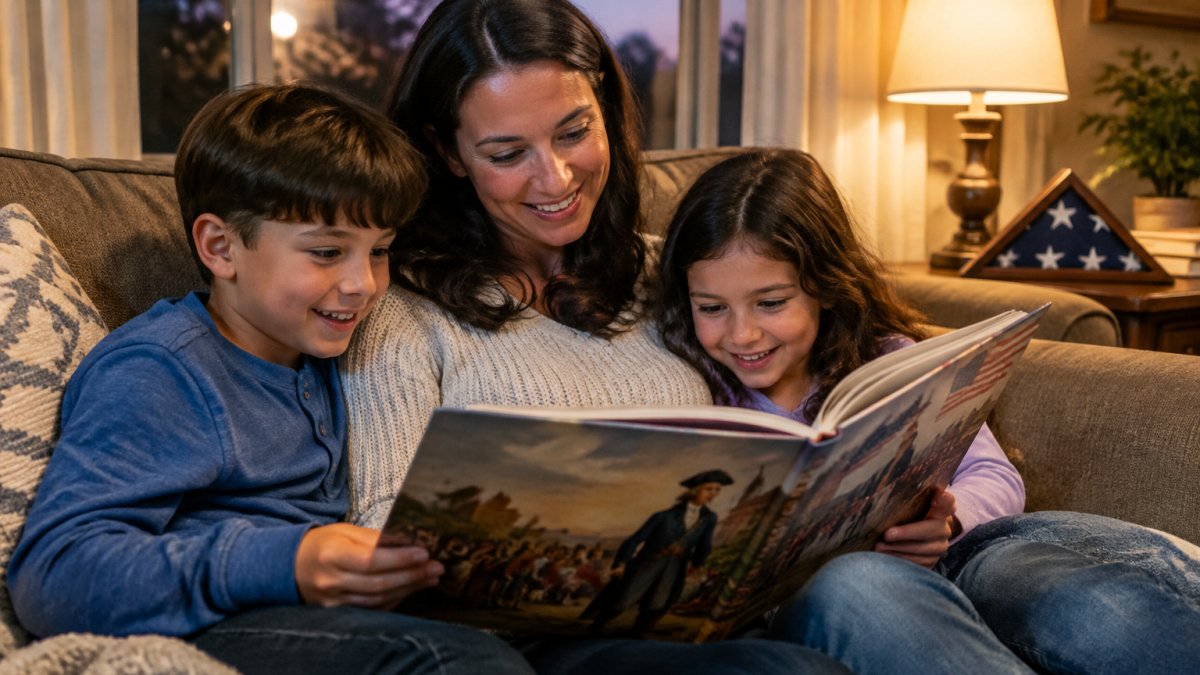
1. The Midnight Ride That Started a Revolution. Paul Revere leaves Boston on horseback on the night of April 18, 1775, warning towns that British soldiers are marching toward Concord. The story works for kids because it is a race with a clear goal.
2. A Printer Who Risked Everything for Independence. A Philadelphia printer puts his name on the Declaration of Independence in July 1776, a document that could get him hanged for treason. This is the founding era at its most human: a person betting his safety on an idea.
3. The Boston Massacre and the Trial That Followed. In March 1770, British soldiers fire into a Boston crowd and kill five people, including Crispus Attucks, a man of African and Native American descent.
Cluster 2: The Declaration and the Founding Documents
4. The Enslaved Poet Who Challenged a Nation's Ideals. Phillis Wheatley, brought to Boston enslaved as a child, publishes poetry in 1773 that forces readers to confront who the new nation's promises were for. Tell this story honestly.
5. The Committee of Five and the Edits That Changed a Nation. Thomas Jefferson drafts the Declaration in June 1776, and the Continental Congress cuts and rewrites roughly a quarter of his text before adopting it on July 4.
6. The Women Who Ran the Farms While the Men Fought. Abigail Adams manages a farm, finances, and family in Braintree, Massachusetts, through the war years, and writes to her husband John in March 1776 asking him to "remember the ladies" in the new government.
Cluster 3: The War and Its Costs
7. A Winter of Suffering That Forged an Army. At Valley Forge in the winter of 1777-1778, soldiers endure cold, hunger, and doubt, and the army survives.
8. The Teenager Who Spied for the Patriots. In 1780, a young enslaved man named James Armistead works as a double agent inside British lines and feeds information to the Continental Army before the siege of Yorktown. Ages 9 and up; the double-agent angle keeps attention.
9. The Crossing That Saved a Cause. On the night of December 25, 1776, George Washington moves roughly 2,400 soldiers across the icy Delaware River and surprises Hessian forces at Trenton the next morning. Ages 7 and up; the weather and the boats are the hooks.
Cluster 4: Building a New Government
10. The Convention That Argued All Summer. In 1787, delegates meet in Philadelphia from May to September to draft the Constitution, and they compromise on representation, slavery, and the presidency.
11. The Bill of Rights and the Promises Added Later. In 1791, the first ten amendments are ratified, and later generations add more. Show your child that the founding document was never finished. Ages 10 and up.
12. The Ordinary Families Who Moved West. After independence, families pack wagons and move into territories that were already home to Native nations, and the story of expansion is also a story of displacement.
The other rule holds across all twelve: one person, one place, one moment. Rotate through stories about people, places, and defining events so history does not collapse into a single date.
American History Stories for Children: How to Choose the Right Ones
Choose American history stories for children by matching the story's length and emotional weight to your child's age, then checking that it names real people and real places. A story that names nobody teaches nothing.
Here is the quick screen we use before sharing a story with a classroom or a child at home:
| Check | What to Look For | Why It Matters |
|---|---|---|
| Named person | A real individual with a role | Kids attach to people, not eras |
| Single moment | One scene, one decision | Keeps attention for ages 6-10 |
| Honest stakes | Risk explained at kid level | Builds trust, not mythology |
| Source note | Where the facts came from | Lets you answer follow-up questions |
| Age fit | Vocabulary matches the reader | Prevents frustration and boredom |
Watch out: the biggest mistake is starting with battles and dates. A child who meets a person first will sit through the timeline later.
America 250 Books for Kids: A Parent's Guide to the Best Reads
The best America 250 books for kids are illustrated collections that tell the founding era as a connected narrative rather than scattered facts. Look for a series that moves in order, from the road to revolution through the Declaration and the early republic.
For families who want every story in one place, our 250th Anniversary of America complete full story collection gathers the series into a single digital set.

A few buying notes from us: pick a format your child will actually read, check whether the reading level fits, and prefer a series you can finish together over a stack of unrelated titles. A book that gets read twice beats three that get abandoned.
Building an American History Timeline for Kids at Home
Build an American history timeline for kids by putting events on a wall in the order they happened, then adding one story card under each date. The physical act of placing a card is what makes the order stick.
Here is the simple version we recommend:
- Tape a long strip of paper along a hallway wall.
- Mark five anchor points: early settlement, the road to revolution, independence, the founding documents, and the early republic.
- Write each story your child hears on an index card with one sentence and one drawing.
- Place the card under its date and let your child do the taping.
- Revisit the wall weekly and ask your child to retell one story from memory.
If you want the timeline to feel interactive, the personalized story book app lets a child see their own name inside a story, which turns a date on the wall into a memory.
Unsung Heroes and Underrepresented Voices in the American Story
Unsung heroes are the people history books skip: the ones who carried messages, ran farms alone, sewed uniforms, or wrote in the face of danger.
Here are the voices we make sure a child hears, with enough specifics to retell at dinner.
Indigenous nations before and after 1776. The land that became the United States was home to hundreds of sovereign nations long before the Declaration.
Enslaved people who pressed the nation's ideals. Phillis Wheatley published poetry in 1773 that asked white readers to see her as a fellow human.
Immigrants and working people. The founding generation was not uniformly English or wealthy.
A simple sourcing check you can do today. Before you share a story with a child ages 8 and up, ask three questions: Who is named? Where did the facts come from? Whose perspective is missing? A story that fails all three is probably a legend, not history. Most practitioners find that a single named person with a documented source beats a page of generalities every time.
Watch out: it is easy to add underrepresented voices as a token paragraph at the end.
One Activity to Do Today: Create a Family Story Quilt
Create a family story quilt by giving each family member one square of paper and asking them to draw a moment from a story they heard. Tape the squares into a grid on the wall and retell the stories as you go.
This works with kids as young as 6 and takes about 30 minutes. Each square gets one drawing and one sentence. When the grid is full, you have a visual record of the anniversary stories your family shared, and a keepsake you can add to all year.
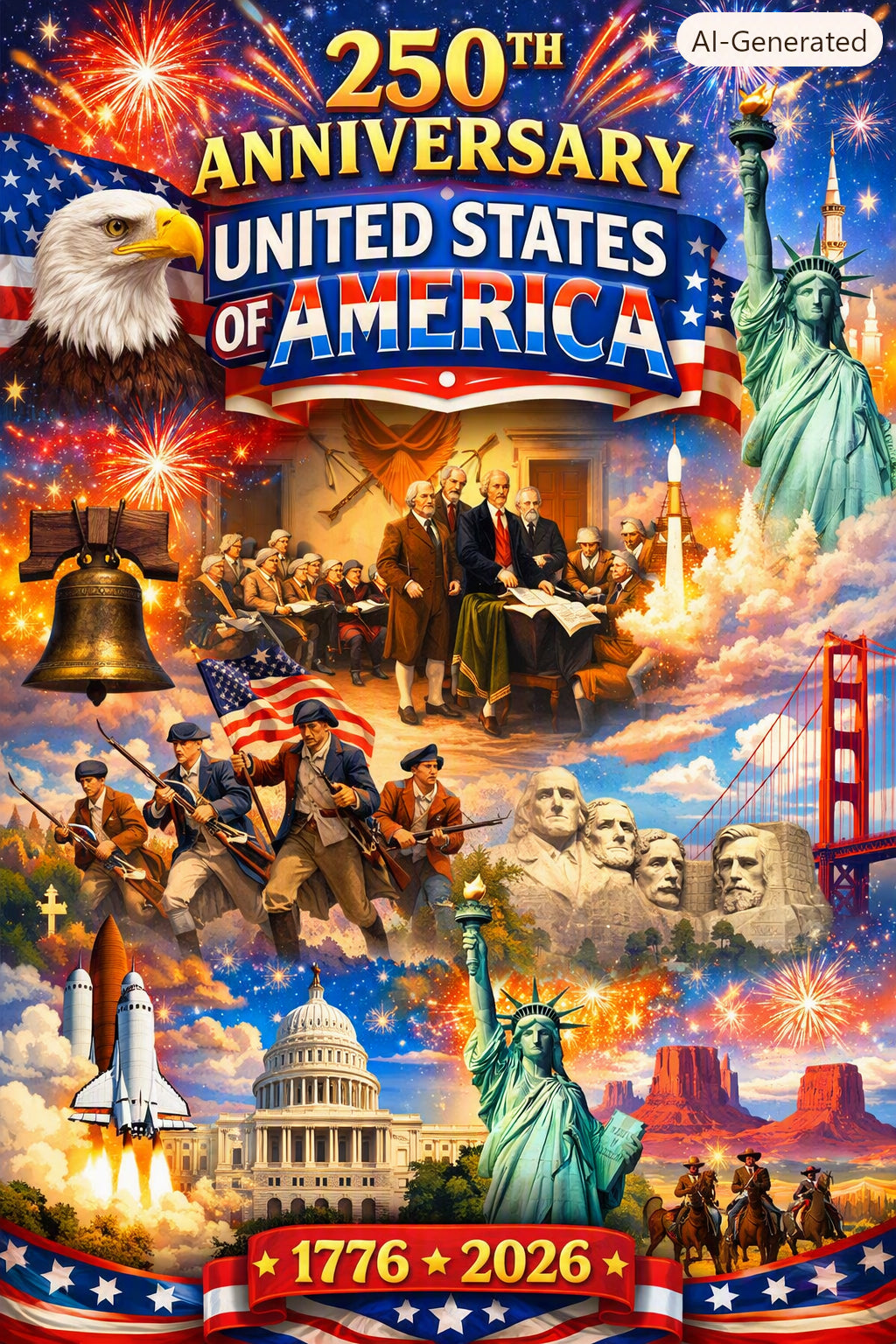
If you want something to display alongside the quilt, the commemorative collectible poster gives the project a centerpiece.
Bring the 250th Anniversary Home with Capite Universe
The anniversary only becomes real for a child when a story lands. Capite Universe builds story-driven learning for ages 6 to 14, with teacher-approved digital content that pairs narrative with reading and critical thinking practice.
Our anniversary series does the work of connecting people, places, and events into one continuous story, from the first sparks of revolution to the birth of a nation.
Pick one story tonight, read it aloud, and let your child ask the questions. To go further, explore the Gold Membership Capite Universe. That is how a 250th anniversary becomes a family memory.

The hardest part of teaching history is not finding facts. It is finding the story that makes a child lean in.
Frequently Asked Questions
What is significant about America's 250th anniversary?
The 250th anniversary, or Semiquincentennial, marks a quarter millennium since the Declaration of Independence was adopted in 1776. It is a moment to reflect on the nation's founding ideals and the diverse stories of people who shaped the country. Families can use this milestone to explore American history through stories, books, and activities that connect past to present.
How can I explain the American Revolution to a child?
Start with a story. Choose a narrative that focuses on a person or event, like Paul Revere's ride or the winter at Valley Forge, and explain the emotions and choices involved. Use age-appropriate books such as those in Capite Universe's 250th Anniversary collection, which retell the Revolution as an adventure for kids ages 6-14. Ask questions and let your child imagine being there.
What are some good books to read with children for America's 250th anniversary?
Look for illustrated storybooks that blend accurate history with engaging narratives. Capite Universe offers age-graded series: the Kids Edition for ages 4-9, the Teen Edition for ages 10-16, and the Adult Edition for older readers. Each book focuses on key moments and unsung heroes, making the 250th anniversary stories accessible and memorable for the whole family.
How can families celebrate America's 250th anniversary through stories?
Set aside time to read together and discuss the stories. Create a simple timeline on a wall or poster, adding events as you read. Visit local historical sites or museums if possible, and encourage children to ask questions. Capite Universe's printable activities and guided stories can supplement your reading and help kids connect with the people and events of the founding era.


